





Say a HealthComms freelancer starts Monday. Does the brief arrive late the Friday afternoon before? Do stakeholder introductions happen only when needed? Does tool access get arranged before their start date, or only after they flag that they cannot proceed? By midweek, are they still waiting for enough context to begin meaningful work?
Stalled starts drain billable hours and delay project milestones. Research consistently shows that structured onboarding improves productivity and shortens the time it takes for new hires to contribute effectively.¹
The gap between engaging a freelancer and receiving productive work is not inevitable. A structured onboarding checklist removes waiting periods by front-loading clarity, so freelancers can start working immediately.
Why Freelancer Starts Stall (And What It Costs You)
Freelancer starts stall because of reactive systems, not incompetence. Agencies handle onboarding as it comes up rather than proactively.
Research shows that effective onboarding significantly accelerates time to productivity, yet many organizations acknowledge that their onboarding processes are inconsistent or poorly structured. Each day a freelancer waits for clarity is a day you’re paying for availability rather than output.
Briefs That Assume Context Freelancers Don’t Have
In many cases, a project description is shared instead of a fully actionable brief. Key elements such as style guides, reference materials, approval pathways, and clear deliverable specifications may not be included.
This slows initial progress as foundational questions need to be clarified before work can move forward.
Stakeholder Introductions That Happen Reactively
The “I’ll introduce you when you need to meet them” approach creates friction at every handoff. Freelancers may not know who reviews drafts or who approves final versions.
Research consistently links unclear responsibilities to communication breakdowns.³ When a draft is finished, but the review path is unclear, progress pauses while roles are clarified instead of moving the work forward.
Communication Norms That Aren’t Stated Upfront
Should they send daily updates or weekly summaries? Is email preferred or Slack? Freelancers guess at what’s expected rather than knowing. This creates friction when you expect daily progress, but they assume weekly check-ins.
What Smooth Onboarding Actually Looks Like
Smooth onboarding means front-loading clarity so freelancers can start working immediately. Agencies that do this well anticipate needs, eliminate waiting periods, and establish norms before work begins. Here’s how:
Start With a Complete Brief (Not Just a Project Description)
A complete brief includes scope, timeline, deliverable format, approval chain, reference materials, style guides, and brand voice examples. For HealthComms work, add therapeutic area background, regulatory considerations, and target audience details. The difference between “we need a white paper” and a brief with enough context to begin writing determines whether your freelancer starts immediately or later.
Provide Tool Access and Platform Orientation Before Day One
Granting access when freelancers ask for it creates waiting periods. They don’t know where shared drives live or how your project tracker works. The first week becomes hunting for information instead of working.
Instead, grant access before the start date to project management tools, shared drives, reference libraries, and communication platforms. Provide a brief orientation: a five-minute Loom or written guide on where things live and how to navigate. This prevents the “Where do I find the brand guidelines?” and “How do I submit drafts?” questions that create waiting periods.
Read More: Workflow Fit: How Agencies Hire HealthComms Freelancers Faster
Map Stakeholders and Set Communication Expectations Early
Create a simple stakeholder map with names, roles, when they’re involved, and contact preferences. Clarify communication norms upfront: Email or Slack? Response time expectations? Daily updates or milestone check-ins? Identify who reviews drafts, who approves final versions, who is the day-to-day contact, and who handles questions about content versus logistics.
Establish Review Cycles and Feedback Expectations
Clarify when the first draft will be reviewed, by whom, and what the timeline is. Define what “revision” means in your process: light polish or structural rework. Set expectations for how many review rounds are typical. This calibration upfront prevents scope creep and misaligned expectations.
Build in First-Week Check-Ins (Not Just Milestone Reviews)
Schedule quick check-ins in the first few days: “How’s the brief clarity? Any gaps? Is communication working?” Course-correct early before misalignment compounds. Freelancers may not raise issues unprompted; proactive check-ins surface friction before it becomes rework.
The Onboarding Checklist That Eliminates Delays
Here’s a checklist that distills smooth onboarding into action items. Use it to eliminate waiting periods and get freelancers productive on day one.
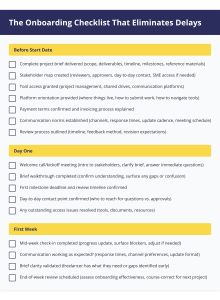
Smooth onboarding turns hired specialists into productive contributors from the start. The difference between immediate momentum and delayed output comes down to structure.
Talus Helps You Start Freelancers Faster
With Talus Freelance, that structure is already in place. You select from pre-vetted HealthComms specialists. Engagement requests go directly to the freelancers you identify as the right fit. Contracts, compliance, and invoicing are handled centrally through the platform, so administrative steps do not delay delivery. Brief details, timelines, and stakeholder information are captured clearly at engagement, reducing back-and-forth once work begins.
The platform adapts to your agency’s existing workflows, which means your team stays focused on delivery while Talus manages the operational layers behind the scenes. You can either search and select directly from the curated network or request guided recommendations based on your project requirements. Share your brief by email, and Talus will surface aligned, pre-vetted specialists for you to engage directly, while handling contracting and administration through the platform.
Book a discovery call to start HealthComms freelancers with clarity, speed, and control.
References
- Kosinski, Matthew. “Onboarding: The Key to Elevating Your Company Culture.” SHRM Executive Network, 30 May 2023,www.shrm.org/executive-network/insights/onboarding-key-to-elevating-company-culture.
- Kosinski,Matthew. “Onboarding: The Key to Elevating Your Company Culture.” SHRM Executive Network, 30 May 2023, www.shrm.org/executive-network/insights/onboarding-key-to-elevating-company-culture.
- Burdick, Michael. “Onboarding Freelancers Is Tough — Here’s How to Do It Right the First Time.” Entrepreneur, edited by Dan Bova, 28 Feb. 2019,www.entrepreneur.com/living/onboarding-freelancers-is-tough-heres-how-to-do-it/328834.