




Evaluation often defaults to what is quickest to check: years of experience, portfolio volume, positive reviews. In HealthComms, where therapeutic depth and regulatory knowledge determine whether work passes review, these are often poor predictors of the performance you actually need.
Even a seasoned freelancer with broad therapeutic experience may lack the focused oncology depth your client requires. A large portfolio may not include submissions that match the specific deliverable you need. What predicts performance is not volume or longevity. What you need are quality signals that predict performance in your specific context.
The Quality Signals That Predict Performance in HealthComms
These signals are more predictive of success in specialized HealthComms environments. Here is why each one matters in practice.
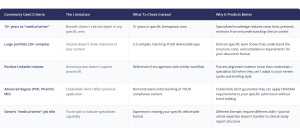
Therapeutic Area Specialization
Fifteen years as a medical writer could mean surface-level familiarity across many therapeutic areas without command of the specific submission pathway, endpoint terminology, or regulatory framework your project requires. Experience matters, but only when it is concentrated in your context.
This depth means the freelancer already understands the approval pathways, endpoint terminology, and safety considerations specific to your client’s work. An oncology specialist knows how overall survival differs from progression-free survival in regulatory submissions and why that distinction matters for your filing.
A rare disease specialist understands orphan drug designation requirements and the smaller trial populations that shape how efficacy data is presented. This knowledge reduces ramp time, improves accuracy, and prevents revisions that stem from misreading the clinical context.
When reviewing experience, look for depth in your therapeutic area, not volume across many.
Deliverable-Specific Expertise
A portfolio filled with medical education materials tells you nothing about whether a freelancer can produce the regulatory submission or clinical study report you need. Twenty samples across different document types often signal breadth rather than the focused execution your project requires.
Clinical submissions require different structure, tone, and compliance knowledge than medical manuscripts or slide decks. A medical writer who excels at journal articles may struggle with the systematic documentation style required for clinical study reports. Research suggests that credentials and experience volume alone are weak predictors of this kind of applied performance.¹
Confirm they have produced your specific deliverable type recently, not just medical content in general. Ask what documents they have written in the past year and whether those match what you need them to produce.
Regulatory and Compliance Knowledge
Generic statements like “I understand compliance” means nothing. Can they articulate the difference between Food and Drug Administration (FDA) and European Medicines Agency (EMA) requirements for the document type you need? Do they know which International Council for Harmonization (ICH) guidelines apply to your deliverables? Even certifications don’t guarantee practical fluency.
American Medical Writers Association (AMWA) certification shows baseline knowledge, but you need to verify they can apply regulatory requirements to your specific submission context without requiring step-by-step guidance.
Collaboration Patterns and Responsiveness
How a freelancer handles revision requests predicts success more than credentials. Generic praise like “great to work with” or “delivered on time” does not tell you whether they can work within your review cycles, integrate feedback from multiple stakeholders, or distinguish between a revision and a scope change.
A freelancer who thrives at one agency may struggle at yours if their previous clients had looser revision control or less rigorous review processes. References from agencies with similar workflows tell you more than general praise. Process alignment matters because even highly skilled specialists can fail when they cannot adapt to your operational reality.
Evaluate Quality Signals Without the Screening Work
Evaluating these quality signals consistently across every hire requires time most HealthComms agencies don’t have during urgent capacity needs. Talus Freelance requires detailed freelance profiles aligned to client needs, along with in-house experience and endorsements from previous clients, presenting transparent information that supports client-led selection.
You skip the screening work and get matched with freelancers proven to deliver in regulated environments. Book a discovery call today.
Reference
1. Dyerly, Regina. “The Myth of Replaceability: Preparing for the Loss of Key Employees.” SHRM Executive Network, 21 2025, www.shrm.org/executive-network/insights/myth-replaceability-preparing-loss-key-employees.